
Lessons From the Village
Shaanti - Epitome of Girl Power
Shanti handled tractors and trucks with an ease that came from practice, knowing exactly how much throttle to give on loose soil and how to reverse a loaded vehicle without stalling. She monitored plant health with the precision of someone who understood both machinery and crops: which fields needed early-morning irrigation, which seedlings were slowing down, and which patches were starting to show nutrient stress.
Walking through the fields with her was like watching a moving field report. She identified deficiencies just by reading leaf patterns, tracked pest activity from one week to the next, and connected small shifts in humidity to changes in crop behavior.
Despite the depth of her knowledge, she was light-hearted, cracking jokes, teasing her friends, and always ready to talk about anything from farm work to music to her goal of learning to ride a bike next.
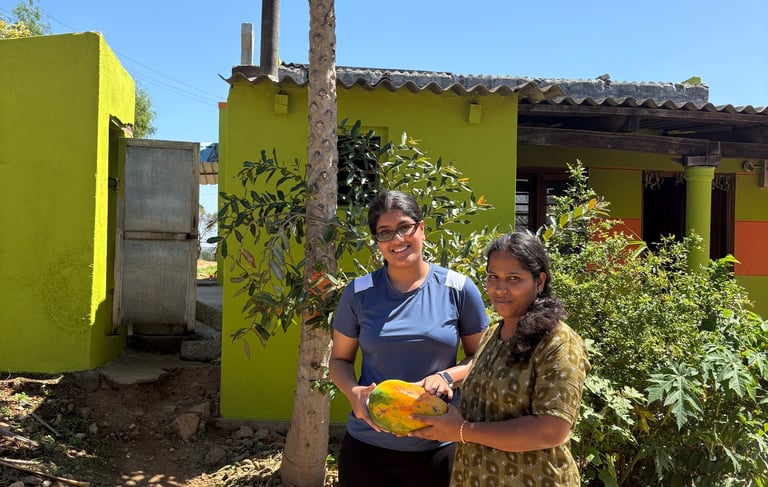
Washing Vessels with Manjula
I was washing vessels with Manjula when I first understood how much of her day was shaped by water, or the lack of it. She washed everything quickly but methodically, using the smallest possible amount because she had spent years carrying every pot of water herself from the village well. She told me how many trips she made on an average day, how the rope frayed every few months, how the weight settled unevenly on her shoulders if she filled the pot even slightly above the rim.
Sitting next to her, rinsing steel plates under the same small bucket, the idea of developing water wheels came to me, not as a “solution” moment, but as a response to the very physical reality I was watching her live through every single day.

Goat Herding 101
I walked the goats before they were going to be milked, which sounds peaceful until you actually try convincing twelve opinionated animals to move in the same direction. They had personalities—dramatic ones. the real learning came from watching the woman who handled them every day. She didn’t rush, shout, or tug; she moved with this quiet certainty that the goats somehow trusted. She knew which ones needed a firmer hand, which ones followed only if you walked slightly ahead, and which one tended to slip away unless you kept an eye on her flank.
She told me that goats mirror the handler’s energy, if you’re impatient, they scatter; if you’re steady, they settle. She also explained how their short walk before milking wasn’t just routine but necessary for better yield: it helped them relax, regulate their feeding cycle, and reduced agitation during milking.

Sitting in the Trucks Transporting Stones — My Core Memory
My favorite moments were sitting in the truck carrying stones for the percolation pit, music blasting, dust in the air. It was chaotic, sweaty, and imperfect. It taught me to adapt and improvise: load what you can, fix what breaks, and keep moving.

Cow Chronicles
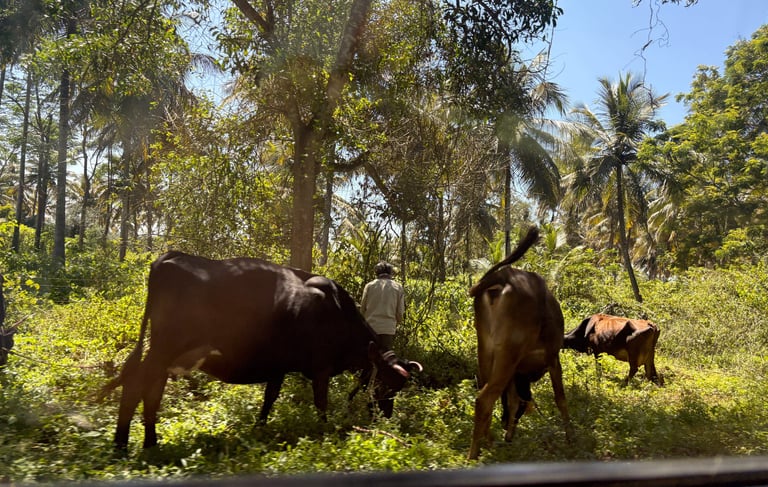
Working with the cows taught me that agriculture isn’t just cultivation, it’s caregiving. Watching how every villager knew each cow’s habits, moods, and quirks made me understand that livestock are seen as part of the family, not assets. It taught me a slower, more attentive way of observing life: reading cues, respecting routine, and understanding that sustainability begins with compassion.
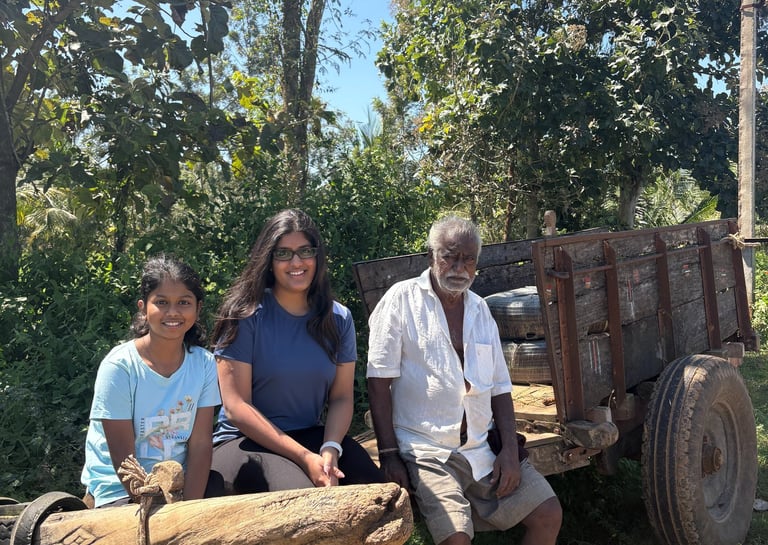
Uncle Ram's Bullock Cart
From the bullock cart, I learnt how every system depends on balance — weight, speed, terrain, even the mood of the animals. Walking beside it with Uncle Ram made this clearer than any diagram could. He would slow the bulls at a slope, shift a sack of fodder by just a few inches, or tighten one rope instead of another, explaining how a tiny imbalance could strain the animals or tilt the cart. Watching him made me realize that sustainable systems aren’t built on big interventions , they’re built on hundreds of small, responsive adjustments made by someone who truly understands how everything fits together.
Going Coconuts!
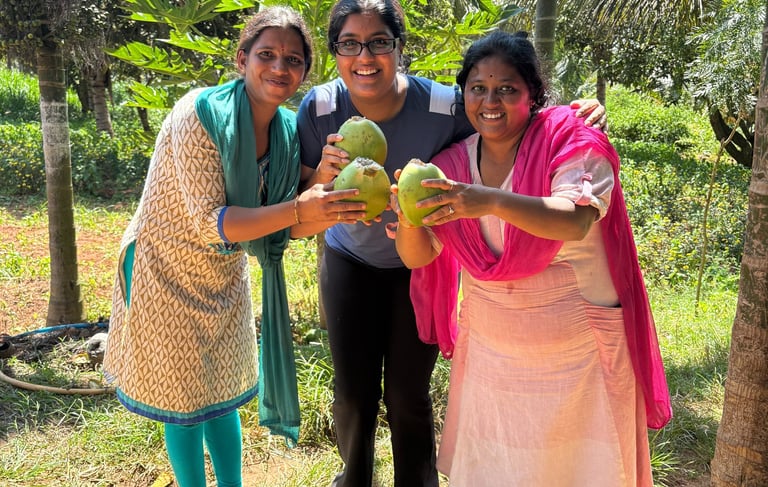
Watching coconuts being brought down from towering palms reminded me how much skill and courage goes into everyday rural labor. It taught me that what we take for granted in our supermarkets comes from human effort. They judged which coconuts were ready by tiny cues like weight, shell temperature, the sound of water shifting inside. One of them showed me how each stage of maturity changed the flavor and purpose: younger coconuts for hydration, slightly older ones for meat, and the mature ones reserved for oil or cooking.
And the coconut water was the best!
Soil & Plant Health
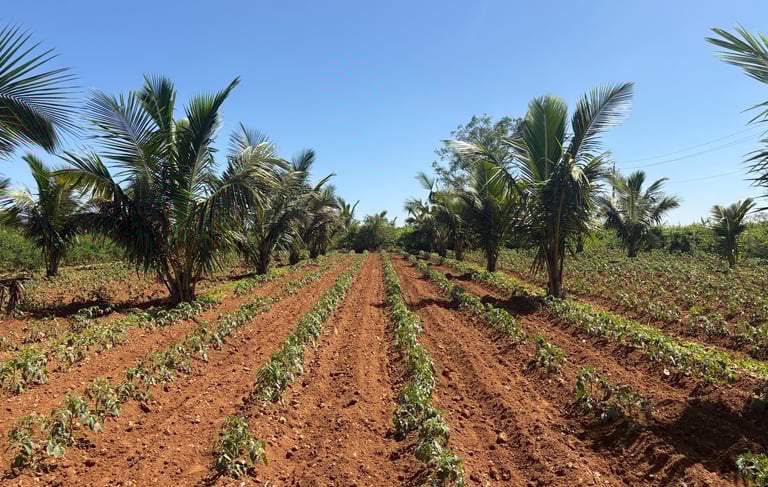
Farmers assess soil health through structure and response: whether it forms stable clumps (good organic content), how fast it absorbs water (indicating porosity), and how crops respond after rain or heat.
Instead of synthetic fertilizers, they rely on locally available inputs — goat and cow manure, ash from cooking stoves, dried leaf compost, and green manuring using legumes to naturally add nitrogen. They rotate crops to prevent nutrient exhaustion and use mulching with straw or dry leaves to retain moisture and slowly enrich the soil.
Plant nutrition is monitored through visible indicators: yellowing leaves for nitrogen deficiency, stunted growth for phosphorus issues, and leaf burn for potassium imbalance. Instead of chemical correction, they apply jeevamrutha, diluted cow urine, or fermented plant extracts to provide micronutrients. Pest-related nutrition stress is treated with neem-based sprays or fermented buttermilk mixtures that protect leaves without harming soil microbes.
Village Veggies
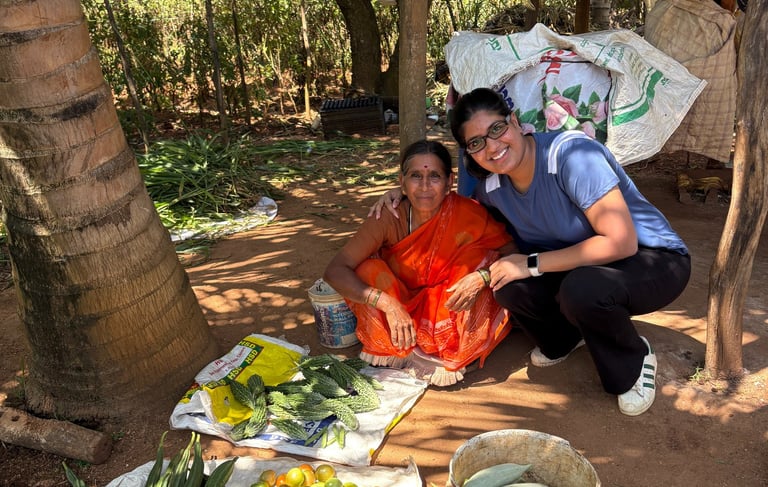
After long days in the sun, the vegetables they harvest taste like they belong to the land itself: crisp, full-flavored, and nothing like what we buy in cities. I won’t pretend otherwise: one of the absolute highlights of spending four years in the village was eating their vegetables the moment they were pulled from the soil. There was something grounding about seeing exactly where they came from and how much work went into something we usually chop up without thinking.
Connect With Us
© 2025. All rights reserved.


projectjardh@gmail.com